
Lake Tekapo lupins at a glance
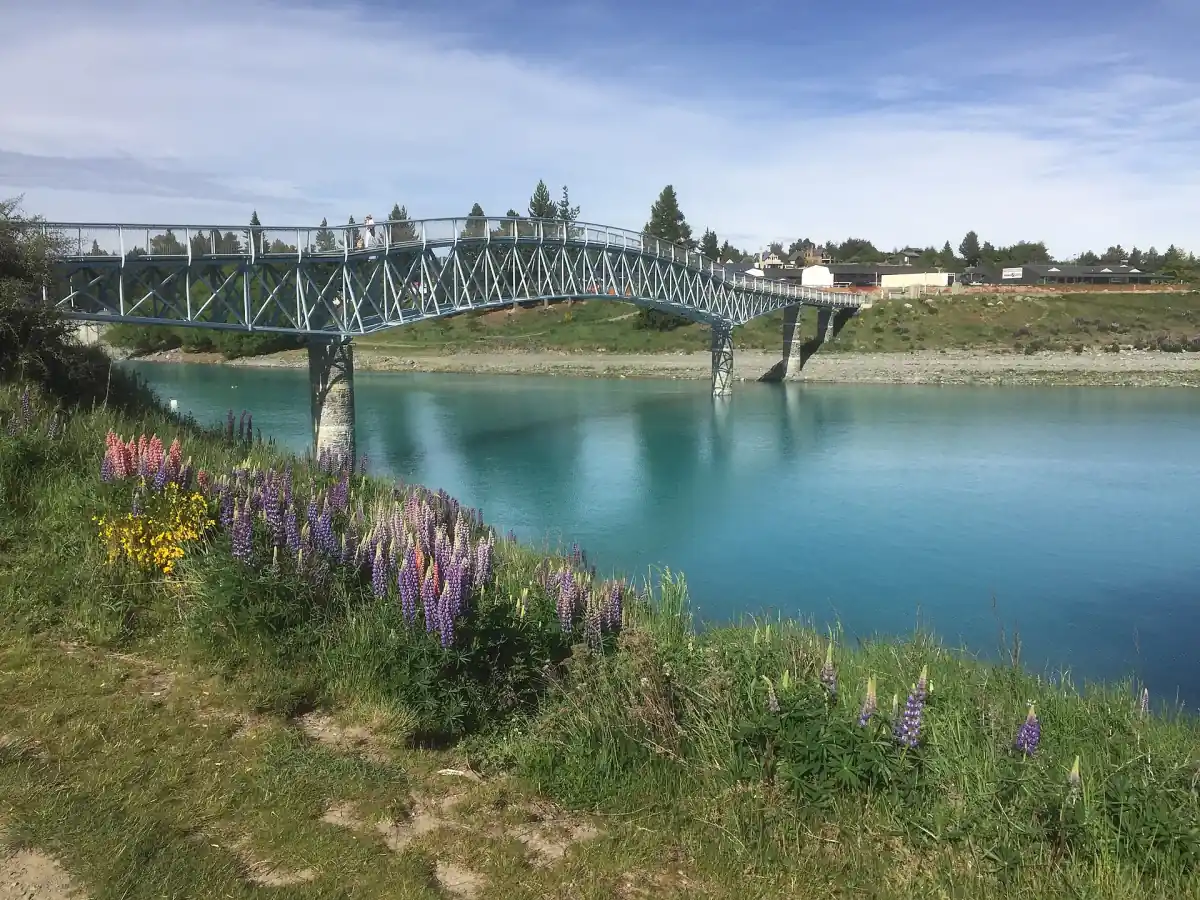
The pink, purple and blue spikes you see in photos of Lake Tekapo are Russell lupins, Lupinus polyphyllus. They are not a native New Zealand wildflower. The plant came in as a garden flower, originally from North America, and DOC treats it as a problem species in the braided river beds of the Mackenzie Basin.
Locally, the flowering window is usually late November to late December, with a peak often in early December. Weather and vegetation control can shift that, so no date is certain. If you want a guide and a set route, a lupin tour or another Lake Tekapo tour takes the planning off your hands.
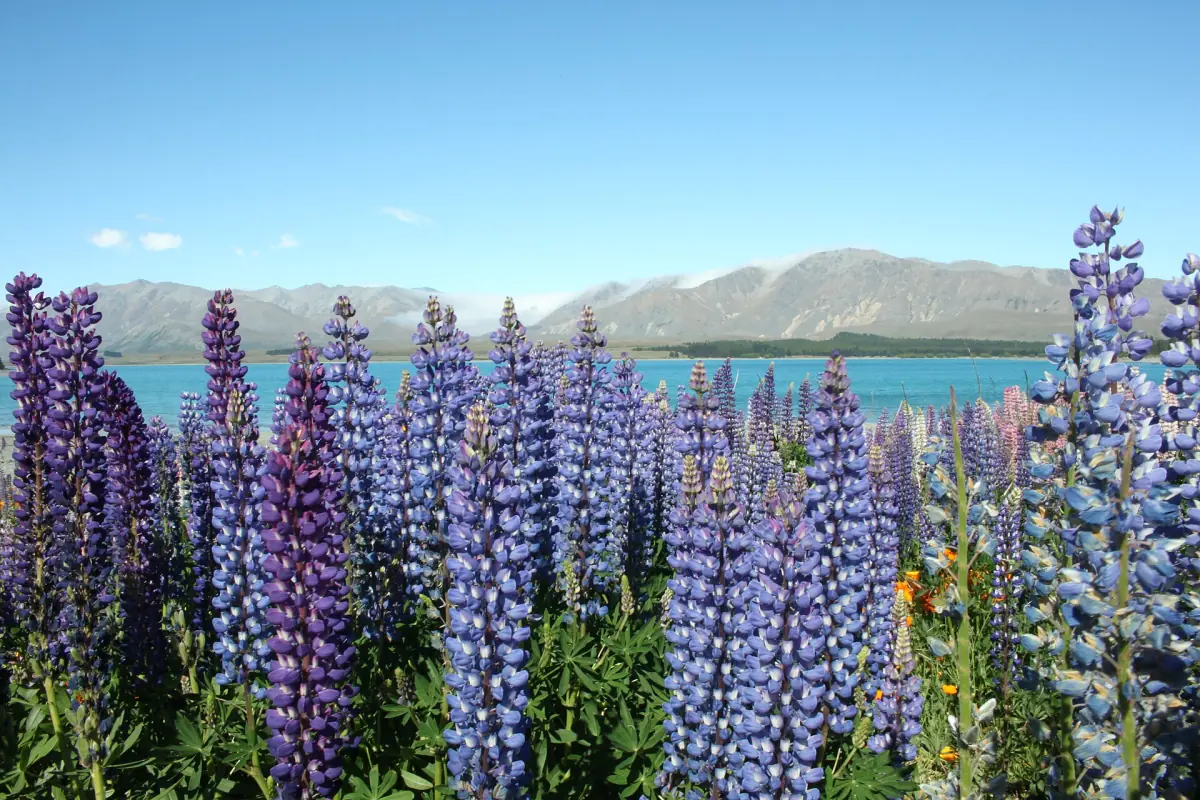
When do the lupins flower at Lake Tekapo?
The local window is narrower than the national one.
| Window | Months | What it means |
|---|---|---|
| Local, around Tekapo | Late November to late December | Peak often in early December |
| New Zealand as a whole | November to February, in some records September to February | National range, not a promise for Tekapo |
For most visitors, the first half of December gives the best chance of seeing lupins in flower around the lake. Late November and late December are worth a try, but the flowering can start late or end early depending on the weather and on control work.
The weather in that period is mild. The 1991–2020 averages for Lake Tekapo give 17.3 °C by day and 4.5 °C at night in November, and 20.1 °C by day and 6.8 °C at night in December. December averages 256.8 hours of sunshine. Pack a warm layer for early mornings and evenings. Month by month details are in the best time to visit Lake Tekapo guide.
Our pick: lupin tour
A guided drive to the lupin spots, best booked in the flowering weeks.
Hand-picked tours, booked through Viator. Prices are indicative starting prices in US dollars (as of October 2026). Tap a tour for live availability and the current price in your currency.
Lupin tours and Lake Tekapo trips
Guided lupin tours from the village and other ways to explore the Mackenzie Basin, with live availability.
Where to see lupins around Lake Tekapo
Lupins spread along the braided river beds of the Mackenzie Basin and appear in patches around the lake. Where they flower, and whether you may walk there, changes from year to year, because control work removes plants and some of the land is private.
A flowering field you see in a photo is not permission to enter it. Stay on public paths, roads and verges, and only go onto private land with the owner's permission. Near the Church of the Good Shepherd, keep to the paths and do not step onto the vegetation; this is a rule for the church grounds.
A guided lupin tour by vehicle from the village is the simplest way to reach flowering spots with permission: the tours include access to private land, live commentary from a local guide, and coffee, tea and a light snack.
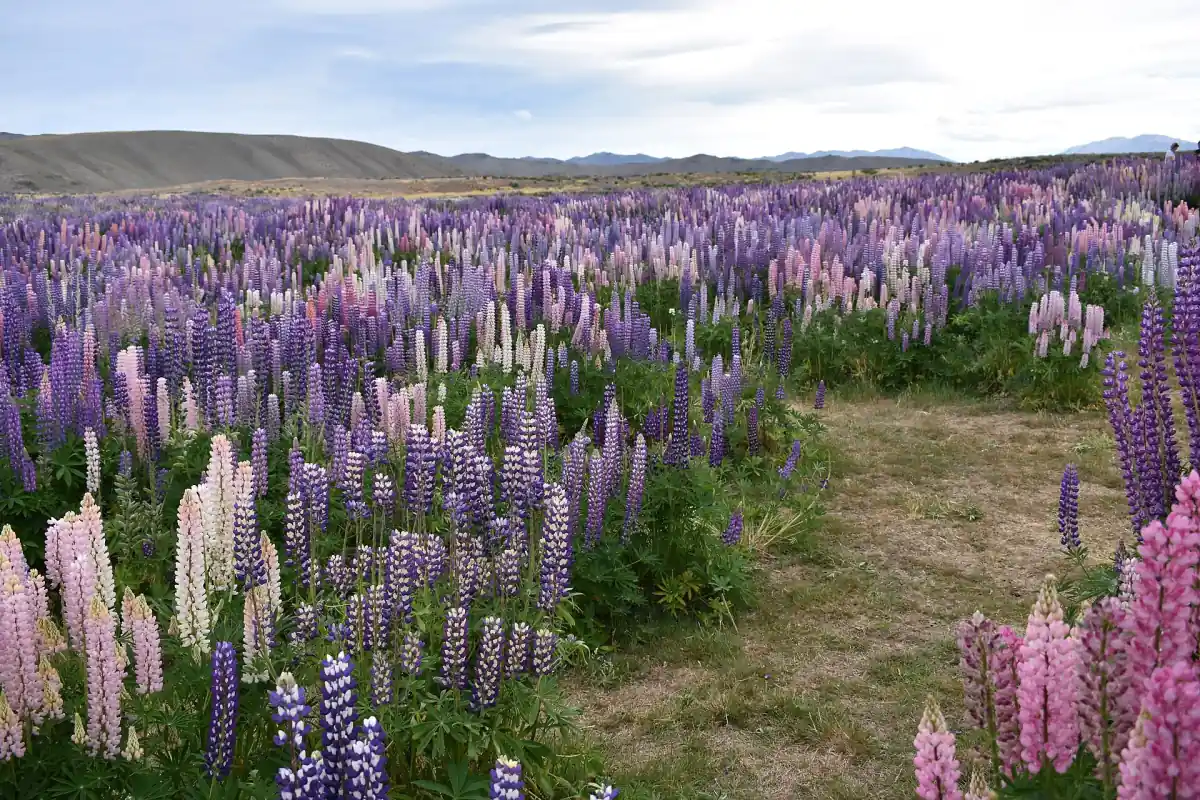
Why the lupins are a problem plant
Beautiful in photos, harmful in the river beds.
An introduced garden plant
The Russell lupin is an introduced garden plant that has become a problem in the braided river beds of the Mackenzie Basin.
Lost nesting ground
Invasive lupins in Canterbury river beds take over the open gravel that breeding birds need, and Environment Canterbury runs control work against them.
What that means for you
Admire them, photograph them, but do not pick them and do not carry seeds away on purpose. Planting lupins elsewhere spreads the problem.
Photographing the lupins with care
A few simple rules keep the flowers, the land and the church grounds intact.
Stay on paths
Trampled patches spoil the view for the next visitor. At the church, staying on the paths is a rule.
Church of the Good Shepherd →No drones at the church
The church does not allow drones at the church or in the village.
Respect private land
Only enter private land, such as farmland, with the owner's permission.
Professional shoots
Professional photography at the church needs a permit: NZD 100 for 30 minutes (2026), not on Sundays.
Make the most of a lupin trip
Other things to fit into a December visit.
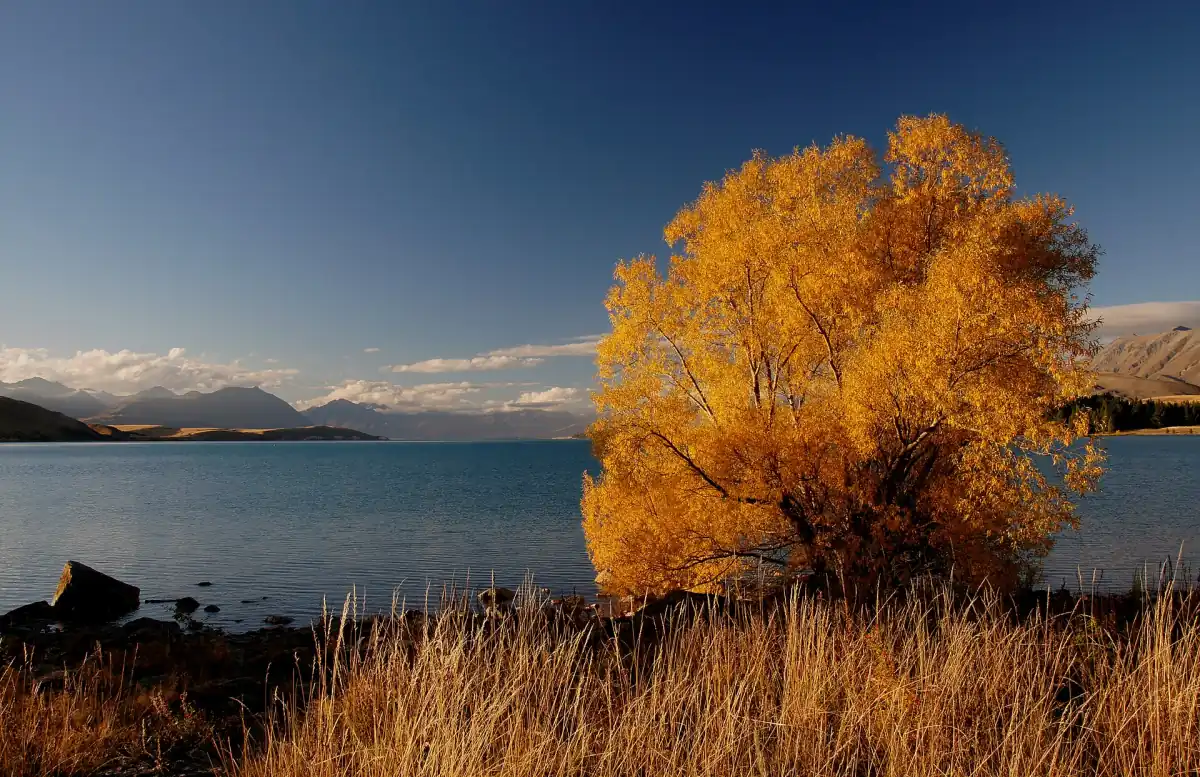
Best time to visit
Weather, lupin season and the other months.
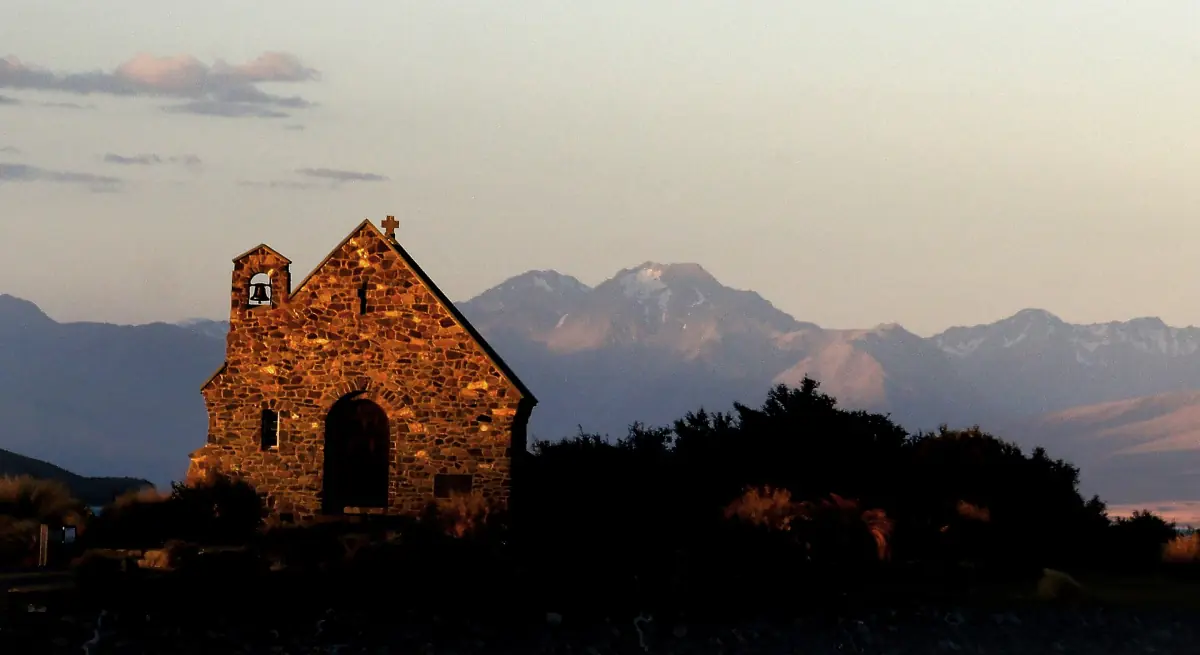
Church of the Good Shepherd
Visiting hours, photo rules and parking.
Things to do
Mount John, the hot pools, walks and more.
From Tekapo you can easily add a drive to Lake Pukaki on the road to Aoraki/Mount Cook.
Lake Tekapo lupins: frequently asked questions
When is lupin season at Lake Tekapo?
Usually from late November to late December, often with a peak in early December. Weather and control work can shift the timing, so it is never guaranteed.
Are the lupins native to New Zealand?
No. The Russell lupin is an introduced garden plant, originally from North America, and DOC treats it as a problem species in the Mackenzie Basin river beds.
Can I pick lupins at Lake Tekapo?
Please don't. The plant is invasive and spreads by seed. Leave the flowers where they are and do not take seeds away.
Where can I see lupins at Lake Tekapo?
That changes each year with control work and access. Stay on public paths and roads, ask before entering private land, or join a guided lupin tour that includes access to private land.
Why is the lake so turquoise in lupin photos?
Lake Tekapo is of glacial origin. Fine rock particles from glacial meltwater stay suspended in the water and give it the turquoise colour that makes the flowers stand out. The lake is up to 120 m deep and lies at about 710 m above sea level.
Will there be lupins in January?
Possibly in places, as the national flowering range runs to February, but the local peak around Tekapo is usually over by late December.